
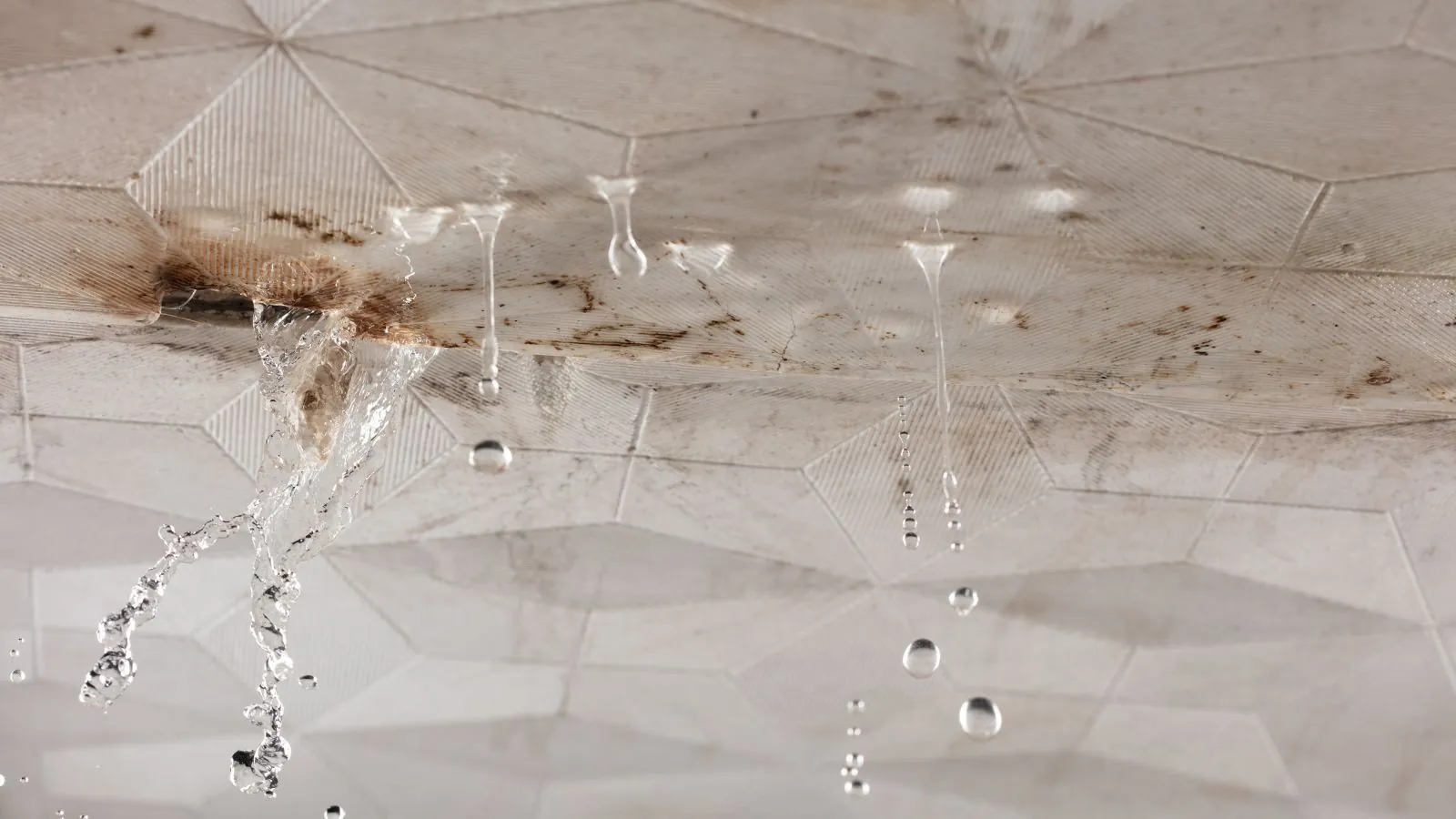
A roof leak is urgent once water is dripping into a room or the ceiling is sagging, and our 24/7 line is open for exactly that. While you wait, set a bucket under the drip, move furniture out from under the wet spot, and keep out of any room where a ceiling bulges or a light fixture is wet. Photograph the stain and the drip before anything moves.
Roof leak water damage is the harm done after rain has found a way through shingles, tile, flashing or a vent boot. The roof is only the entry point. Most of the cost comes from what the water soaks on the way down.
Drying follows ANSI/IICRC S500, a published industry reference, and a homeowner can ask any contractor which practices it follows.
How rain becomes a wet ceiling
Water rarely drips straight down from the hole. It lands on the roof deck or underlayment, follows a rafter or a nail, and soaks into attic insulation, which holds it like a sponge. From there it spreads sideways across the top of the drywall, so the stain you see in a bedroom can sit several feet from the actual opening.
The Thousand Oaks area averages 17.35 inches of precipitation a year according to NOAA climate normals, nearly all of it in cool winter months after long dry summers. That pattern means a roof that has baked for months gets its real test in a few storms, so the first leak often shows up in the first heavy rain of the season, and checking the attic right after that rain catches it early.
Housing age shapes what fails. Older areas such as Casa Conejo and Ventu Park, which are unincorporated parts of Newbury Park, tend to have older roof layers and flashing that have seen many seasons, while newer areas such as Dos Vientos Ranch and Rancho Conejo Village have newer roofs. We have no local count of which fails more often, so judge your own roof by its condition, not its neighborhood.
What you are seeing and what it means
Brown ring on the ceiling
Water has reached the drywall and dried at the edges, then wetted again. The ring grows each time it rains.
Bubbling or sagging paint
Moisture is trapped behind the surface. A sagging area may be holding a pocket of water, so do not poke it with your face under it.
Dripping light fixture
Water has followed the wiring opening. Leave the fixture off and do not touch it with wet hands.
Safety steps for the first hour
Electricity and water share the attic. If a ceiling light is dripping, or water is near outlets or a panel, stay out and call your electric utility or 911 about any electrical risk before dialing us. Switch off that one circuit only if you can reach the panel on dry footing.
Do not climb onto a wet roof to look for the hole. Wet shingles and tile are slick, and a fall is a far worse loss than a stain. A temporary cover or tarp is the roofer's job, and we will tell you plainly that a licensed roofer needs to be on that part.
Water coming through the ceiling now?
Call the 24/7 line and tell us where it is dripping and what is wet.
Our process from attic to ceiling
Stop and document
Once the roofer has the opening covered, we photograph the stain, the attic and the wet materials for your claim.
Map the moisture
A thermal imaging camera shows cool wet zones across the ceiling, and moisture meters confirm what is wet in drywall, framing and insulation.
Remove wet insulation
Soaked attic insulation does not dry well in place and presses on the ceiling below. We bag it out and keep the dust contained.
Open and dry the cavity
Small openings or removal of damaged drywall let air reach the framing. Air movers and LGR dehumidifiers dry the cavity and the room together.
Verify and hand off
Readings are taken again until the framing and drywall match dry reference levels. Repair of the ceiling surface follows under water damage repair.
What changes the cost
The main factors are how much insulation got wet, how far the water spread across the ceiling, how many rooms sit below, and how long the leak ran. A written scope and price are explained before work starts.
| What you find | Likely scope | Why |
|---|---|---|
| One small stain, dry attic | Moisture check and spot drying | Little water reached the framing |
| Wet insulation over one room | Insulation removal and cavity drying | Insulation holds water against the ceiling |
| Sagging drywall | Drywall removal and framing drying | Soaked board loses strength and will not recover |
Insurance fit for roof leaks
The California Department of Insurance explains that coverage turns on the cause. A storm opening in the roofing is treated differently from a roof that was left to wear out for years. A storm that tears a roof open reads differently from a worn seal that has seeped for a season. Read your policy wording or call your insurer, and keep photos, the roofer's report and receipts.
Mistakes to avoid
- Leaving wet insulation in place because the ceiling looks dry on the surface.
- Painting over a stain before the cavity above has been checked, which hides ongoing moisture.
- Letting a long-running slow leak sit, because it takes longer to dry and raises the chance of mold remediation later.
If your home is east along US 101, we also serve Thousand Oaks and Westlake Village, and the same drying steps apply there. For water that is no longer rising through a roof but is spreading everywhere, see water mitigation.
Frequently asked questions
Is emergency roof leak water damage cleanup available in Newbury Park?
Yes. The phone line runs all day and all night, including holidays, and same-day response is offered when available.
Do you fix the roof?
No. A roofer repairs the roof and puts on any temporary cover. We handle the water side, which is removing wet insulation and drying the attic, framing and ceilings below.
Should I wait until the rain stops to call?
No. Call while it is still raining if water is in the house. We can start by advising you on safe steps and planning the drying, and the heavy work then lines up with the roofer's repair.
Drying equipment cannot finish the job while new water is still arriving, so the roof cover and the drying plan need to fit together.
How do I know if the attic insulation is wet?
Wet insulation looks flattened or darker and feels heavy or cold. Do not step between the joists, because you can fall through the ceiling. A moisture meter and thermal camera check it from a safe position.
Can a ceiling stain come back after it dries?
A stain can return if the roof is not sealed, because new rain follows the same path. Fixing the entry point first and confirming dry readings afterward is what keeps the ceiling repair from repeating.