
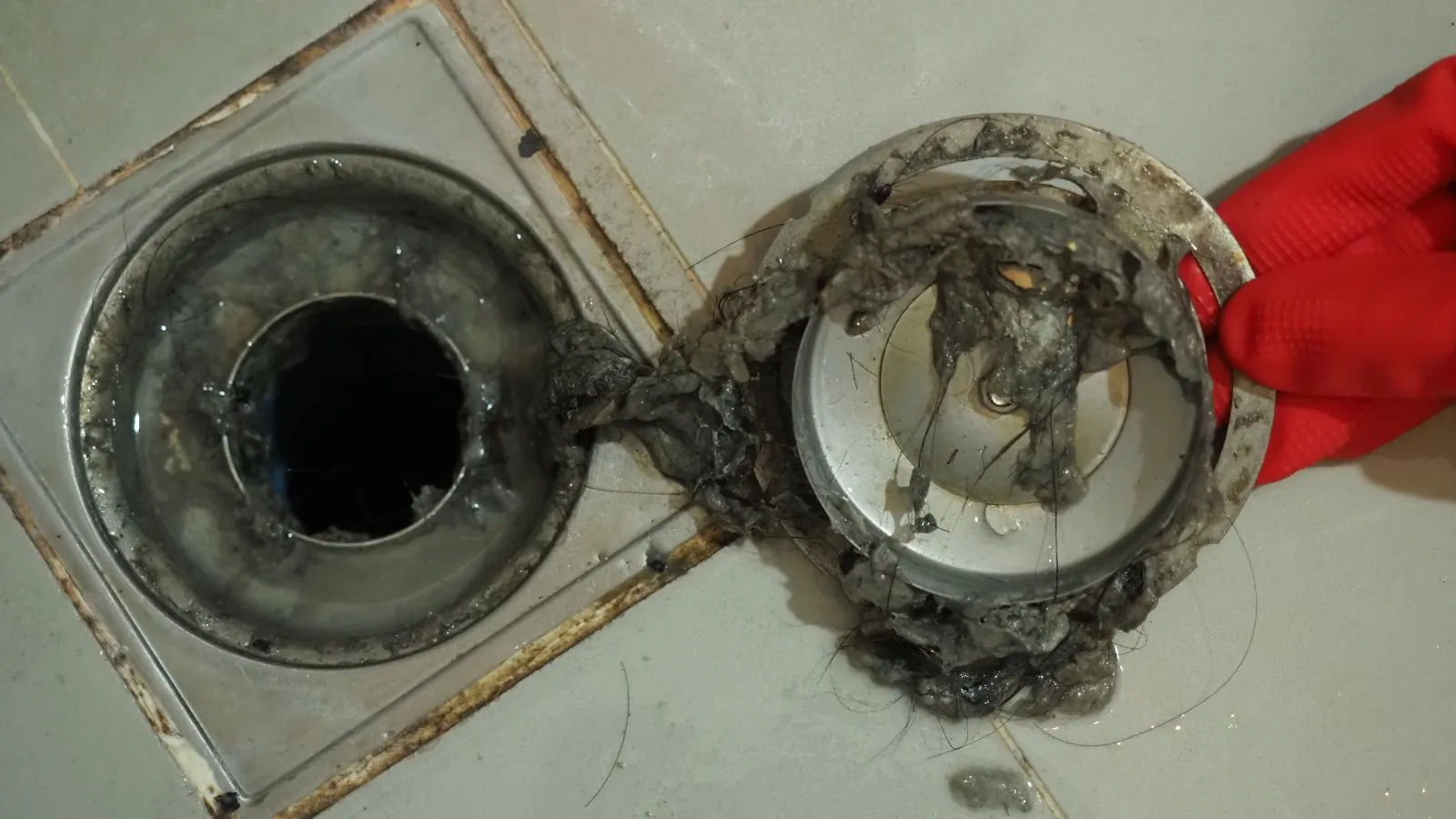
If sewage is coming up through a toilet, tub or floor drain, this is an urgent call, and the 24/7 line is open now. Before anyone arrives, stop using every sink, toilet, shower and washer in the house, because each one sends more water into the same blocked line. Keep everyone out of the affected rooms and shut the doors if you can.
Sewage backup cleanup deals with what restoration crews call Category 3 water, meaning water that carries bacteria and waste and is never treated as clean. The published ANSI/IICRC S500 reference classifies sewage as Category 3 water, and a homeowner can ask any contractor how it handles that category.
Why a drain line backs up into a house
A backup starts with a blockage, and where the blockage sits decides who fixes it. A clog inside the house usually shows up at the lowest fixture, such as a floor drain, a ground-floor tub or a basement-level toilet. A clog in the private lateral that runs from the house to the street, or in the public main, can push waste up through those same low points.
Heavy winter rain can also overload a line when groundwater and runoff find their way into aging pipe joints. We have no local figures for how often that happens in Newbury Park, so treat it as one possible cause and not a prediction. Because Thousand Oaks area water providers do not necessarily handle sewage, ask your city or your water provider who maintains the line that serves your address before you assume anything.
Safety steps for the first hour
Sewage safety
Stay out of the water, keep children and pets away, and do not walk through the affected area and then through the rest of the house. If water has reached outlets, the panel or a gas appliance, call your electric or gas utility or 911 before you call the restoration line. Cut power to the room only if the panel can be reached with dry hands and dry footing.
- Do not mix bleach, ammonia or other household cleaners, because the fumes can be dangerous in a closed room.
- Do not run a household vacuum or fans through the area, which spreads contaminated droplets.
- Do not pump or hose the water to the street or a storm drain.
- Photograph the water line and damaged items from the doorway before anything is moved.
The storm drain rule matters here more than anywhere else. The City of Thousand Oaks storm drain ordinance allows only clean water into storm drains, so sewage sent to the gutter can bring a violation on top of the loss. Leave extraction to a crew that hauls contaminated water away properly.
What you see and what it means
Gurgling and slow drains
Several fixtures draining slowly at once points to a main or lateral blockage, not a single clogged trap. Stop using water and call a plumber.
Water in a floor drain or tub
Low fixtures overflow first because they sit closest to the blockage. Anything that reaches carpet or drywall now counts as contaminated.
Toilet overflowing with waste
Flushing again only adds volume. Close the lid, stop all water use and keep the room closed.
Sewer odor after the water is gone
Odor means waste soaked into porous material, such as pad, drywall or baseboard, that looks dry on top.
How the cleanup is done
Suit up and contain
The crew wears gloves, boots, respirators and disposable suits, then seals off the affected area with plastic sheeting so contamination stays put.
Extract and remove
Extraction units remove the water. Carpet, pad, wet drywall and insulation that soaked up sewage are cut out and bagged, because porous material cannot be made safe in place.
Clean and sanitize
Hard surfaces and framing are scrubbed and treated with an antimicrobial product, and the cleaned cavities are left open.
Dry and scrub the air
Air movers and LGR dehumidifiers dry what remains while HEPA air scrubbers run under negative air containment to keep the work area from leaking into the house.
Verify
Moisture meters and a thermal imaging camera confirm the structure is dry before containment comes down and repair begins.
Sewage on the floor right now?
Call the 24/7 line and describe where it came from and how far it spread.
What changes the cost
Scope is driven by how far the water traveled, how many rooms it touched, how much porous material must be removed and how long it sat. Finished basements and rooms with built-in cabinetry take more removal than a tiled laundry room. Scope and price are explained before work starts.
Insurance and the plumbing repair
The California Department of Insurance explains that coverage depends on the cause, and many policies treat sewer or drain backup as its own item with its own limit. Some include it only through an added endorsement, so check your policy or ask your insurer before the loss is cleaned up, and keep photos, video and receipts.
The blockage itself is a plumber's job, and the City of Thousand Oaks permit list includes sewer line repair or replacement, so ask the city building department whether your repair needs a permit. Once the line is clear, flood damage restoration covers cases where outside water entered as well, and water damage cleanup covers the rebuild-ready stage.
Mistakes to avoid
The common mistakes are reusing a household mop elsewhere, running the washer to flush the line, and leaving wet carpet in place hoping it dries. Residue can leave odor in the pad and drywall long after the surface looks fine. If wet material stayed for days, a mold remediation check may follow.
We serve Thousand Oaks and Moorpark as well, and the process is the same wherever the line backed up.
Frequently asked questions
Is emergency sewage backup cleanup available in Newbury Park?
Yes. The line is staffed all day and all night, including holidays, with same-day response when available.
Who is responsible for a sewer backup, me or the city?
It depends on where the blockage is. A clog inside the house or in the private lateral is generally the owner's to fix, while a blockage in the public main is not. Ask the city or your water provider who maintains the line, and have a plumber camera the pipe to locate the clog.
Can I clean up sewage myself?
A very small spill on a hard floor can be handled with gloves, boots and a disinfectant used alone. Anything that reached carpet, drywall or more than one room needs protective gear, containment and removal of porous material.
Do I have to throw out the carpet?
In most cases, yes. Carpet and pad that soaked up sewage cannot be reliably sanitized, so they are removed and replaced after the subfloor is cleaned and dried.
How do I know the area is safe afterward?
The crew confirms the structure is dry with moisture meters and a thermal imaging camera, and the sanitized surfaces are checked before containment comes down. Questions about health belong to your physician.