
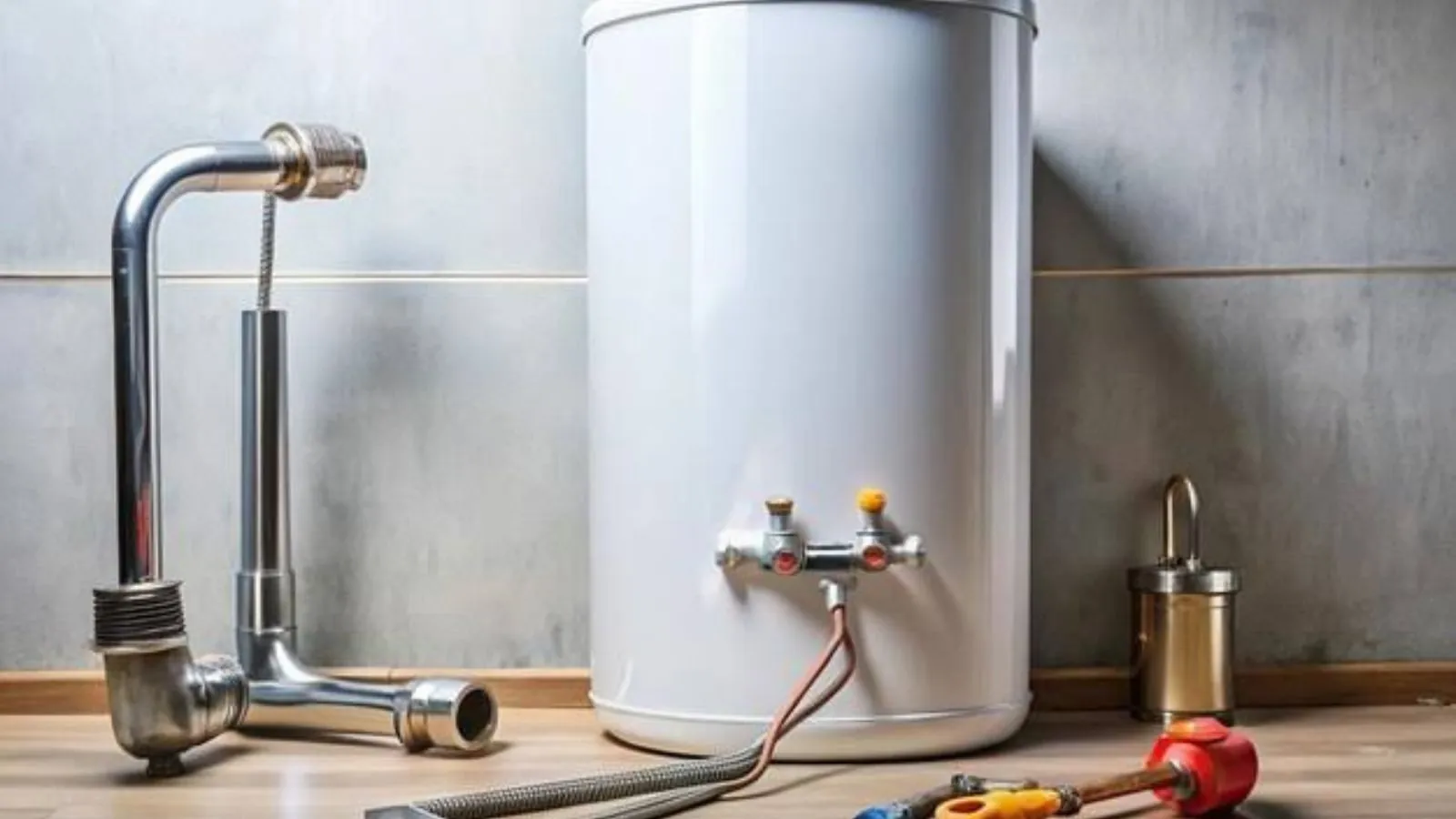
A leaking water heater is urgent because the tank holds dozens of gallons and a bad fitting keeps feeding it. Call the 24/7 line, then close the cold-water inlet valve on the pipe above the heater and turn the gas control to pilot or switch off the breaker for an electric unit. If the water is steaming, stay back from it.
How a water heater ends up on your floor
Most tanks fail from the inside. Sediment and corrosion eat through the steel lining, a seam weeps, and a slow drip becomes a steady stream. Other leaks start at the cold inlet or hot outlet connections, the drain valve near the bottom, or the discharge pipe from the temperature and pressure relief valve, which sends water out when the tank runs too hot or too full.
What a leaking heater looks like
Puddle at the base
Water pooling around the tank or its pan, often warm to the touch, usually points to the tank body or the drain valve.
Rust trails on fittings
Orange streaks or crust at the pipe connections show a slow seep that has been running for a while.
Wet relief valve pipe
Dripping from the discharge pipe means the relief valve is opening. A plumber needs to find out why.
Damp wall or flooring nearby
Baseboards that swell, drywall that feels cool and soft, or a musty closet suggest water has left the tank area.
Ceiling stain under an attic unit
A brown ring or sagging spot below the attic means water has already soaked the insulation above.
Safety steps for the first hour
Hot water from a tank can scald, so keep children and pets away and wear closed shoes before you walk near it. Close the cold-water inlet valve on the heater first. If it will not turn, the main shutoff for the house is the next stop.
Finding that main valve is easier when you know who supplies you. Four water providers serve the Conejo Valley, according to the City of Thousand Oaks, and the city publishes a Find Your Water Provider map at toaks.gov/waterproviders. Read your bill or check the map before an emergency so you know which meter box to open.
Gas and electric warning
If you smell gas, leave the house and call your gas utility or 911 before calling the restoration line. If water is touching the heater's wiring or a nearby outlet, do not touch the unit. Cut power at the panel only if you can reach it completely dry.
Heater leaking right now?
Call the 24/7 line and tell us where the unit sits and how far the water has run.
How we dry out after a heater leak
Confirm the water is off
We check that the inlet valve or main is closed. Extraction is wasted if the tank is still feeding the floor.
Extract the water
Portable extraction units pull water from carpet, pad and hard flooring. On a garage slab a pump and squeegee push the water toward a safe drain, never the street.
Map the hidden moisture
A moisture meter and a thermal imaging camera show how far water wicked into wall bases, the shared wall, flooring seams and insulation.
Dry in place
Air movers and LGR dehumidifiers run until readings match dry reference material. Wet baseboards or bottom drywall come off when drying them in place will not work.
Clean and deodorize
If the water sat on the floor or in insulation, we wipe down and treat surfaces with antimicrobial products, then remove odor sources.
Drying follows ANSI/IICRC S500, the published industry reference, and a homeowner can ask any contractor which practices it uses. The plumber replaces or repairs the heater. We handle the water, the materials and the paperwork on the damage side, then move into water damage cleanup or water mitigation steps as the job requires.
Replacement permits and who does what
The City of Thousand Oaks permit list includes replacing water heaters, filed through its TO/24 online portal, with the building office at (805) 449-2320. Ask your plumber who pulls the permit before the new unit goes in, because an inspection can only be scheduled through TO/24.
| What failed | Who fixes it | What we handle |
|---|---|---|
| Tank body or lining | Plumber replaces the heater | Extraction, drying and cleanup of the area |
| Supply or drain connection | Plumber repairs the fitting | Wall base and flooring drying |
| Relief valve discharge | Plumber finds the pressure cause | Drying where the discharge pipe ran |
| Attic unit leak | Plumber repairs or replaces | Wet insulation removal and ceiling drying |
Where insurance fits, and what drives cost
A tank that fails suddenly is usually treated differently from a seep that ran for weeks, and policies vary on both. Photograph rust trails, stains and the date you found the water. Read your policy wording or call your insurer. Cost depends on how much water ran, how long it sat, and whether insulation, carpet or drywall came out, and scope and price are explained before work starts.
The California Department of Insurance states that standard homeowners policies do not cover flood. A failed tank inside the house is a plumbing event, not a flood, so the distinction affects which part of your policy your insurer will look at.
Mistakes to avoid
If the water sat in insulation or drywall for a while, ask about mold remediation options and plan to dry the area first. We also work in Thousand Oaks and Westlake Village when a heater fails there.
Do not drain the tank by hand onto finished flooring, and do not assume a dry-looking floor is dry, since wall bases and slab edges hold water longer.
Frequently asked questions
Is emergency water heater leak cleanup available in Newbury Park?
Yes. The phone line runs all day and all night, including weekends, with same-day response when available.
Is it safe to touch a leaking water heater?
Not without caution. Water from the tank can be hot enough to scald, and a gas or electric unit adds risk. Shut off the cold inlet valve and the gas or power first, and keep hands off wet wiring.
If you smell gas, leave and call your gas utility or 911.
Should I drain the tank myself?
Usually not. A tank holds a lot of hot water, and emptying it through the drain valve onto flooring creates a second wet area. A plumber can drain it to a proper outlet when replacing the unit.
Do you replace the water heater?
No. A licensed plumber replaces or repairs the unit. Our work is on the water side, which means extraction, drying, cleanup and a record of what was wet.
Ask your plumber about the permit, since the city permit list includes water heater replacement.
How soon can floors be damaged by a leaking heater?
There is no safe window. Carpet pad and drywall start absorbing water at once, and a slab edge or wall base can stay wet long after the surface looks dry. Shut the water off and call early.