
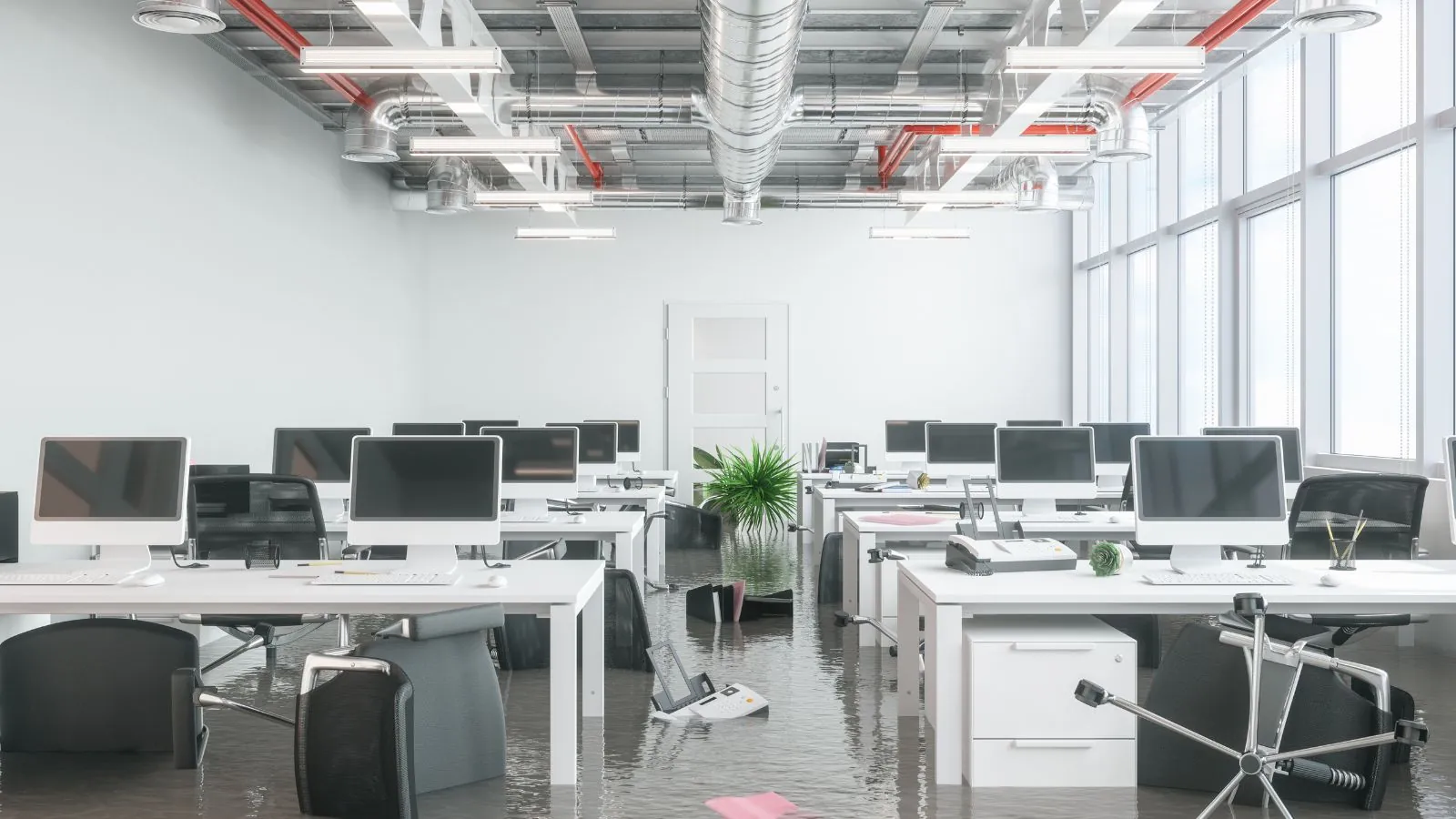
Commercial water damage is water from a pipe, roof, sprinkler line or storm that has soaked the floors, walls, ceilings or stock of a business property. Call at once if water is still running, if it is near electrical gear or if people are in the space. Shut the water source if you know where the valve is, and keep staff away from wet areas.
For commercial buildings we work from the published ANSI/IICRC S500 reference, and a property manager can ask any contractor which practices it follows.
Where commercial water comes from
Pipe and fixture failures
Supply lines, restroom fixtures, break room plumbing and water heaters leak into suites below and beside them, often overnight.
Roof and drain water
Flat or low-slope roofs pond water, and a clogged roof drain sends it into ceiling tiles, insulation and walls. See roof leak water damage for the residential version of the same path.
Sprinkler and fire line releases
A tripped head or a broken fitting can discharge a lot of water in minutes, usually clean at first.
Storm and runoff entry
Rain pooling at loading doors or entry thresholds works its way under flooring and into wall bases.
Safety steps for the first hour
Safety first
Do not enter a space where water has reached the electrical panel, floor outlets, equipment or a gas appliance. Call the electric or gas utility or 911 before you call the restoration line. Shut off power to the affected area only if the panel can be reached with dry footing, and keep everyone out of standing water.
Once the space is safe, the order of moves matters. Close the water source, lift inventory, files and electronics onto dry surfaces, and take photos and short video before anything is moved. Do not run a vacuum on standing water, and do not use ceiling areas that are sagging.
How we work in a commercial building
Walk the loss
The crew confirms the source is off, then maps the wet areas with moisture meters and a thermal imaging camera, including suites and ceilings the water traveled into.
Extract
Pumps and extraction units pull water out of carpet, tile floors and low areas. Wet ceiling tile and insulation are removed where they hold water.
Dry in place
Air movers and LGR dehumidifiers dry flooring, wall bases and cavities. Larger floor plates need more equipment and a layout that keeps airflow moving.
Clean and treat
Affected surfaces are cleaned, and an antimicrobial treatment is applied when the water was not clean.
Hand off repair scope
A written scope lists removed materials and readings, so the owner, manager or contractor can plan the rebuild.
Water in the building after hours?
Call the 24/7 line and tell us what is wet and whether the water is still running.
What to have ready
Commercial scope depends on the building, the lease and the policy, so a few documents speed up decisions. Keep a floor plan, the locations of the water and power shutoffs, contacts for the property manager, landlord or tenants, and your policy details within reach. Know who owns the ceiling, walls and floor finishes, because that decides who approves the work.
Newbury Park's northern Rancho Conejo area is described by Wikipedia as an industrial and office district, and those buildings often have multiple suites sharing walls, ceilings and risers. A leak in one suite can reach its neighbors, so tell us which tenants are adjacent and who can open their doors.
What changes the cost
| Factor | Why it matters |
|---|---|
| Square footage wet | More floor and wall area means more equipment and more drying days |
| Water category | Clean, gray and contaminated water call for different removal and cleaning |
| Finishes | Carpet tile, vinyl, concrete and drywall dry or fail in different ways |
| Access and hours | Occupied suites, secured areas and after-hours work affect the plan |
| Time wet | The longer materials stay wet, the more has to come out |
Scope and price are explained before work starts.
Insurance, permits and repair
The California Department of Insurance states that homeowners and commercial policies typically exclude flood, so rising water from outside needs separate coverage and a different path than a burst pipe. Commercial policies differ, and a sudden failure is usually treated differently from a leak that ran unnoticed. Read the policy wording or call the carrier or broker, and keep photos, readings and receipts for the file.
Repair scope can trigger permit questions, and the City of Thousand Oaks runs permits and inspections through its TO/24 portal, with a building contact for scope questions. Permit rules vary by scope, so ask the city building department before repair work begins. Water source questions also matter, and the city's Find Your Water Provider map or your water bill shows which of the four Conejo Valley providers serves the building.
Mistakes to avoid
The costly mistakes are waiting until Monday to call, turning off the water but leaving wet carpet tile in place, and replacing finishes before readings show the wall is dry. For gradual or storm water, water mitigation covers the drying stage and storm water damage covers the rain side. When outside water flooded the property, see flood damage restoration.
We also serve Camarillo and Westlake Village, where business owners use the same steps.
Frequently asked questions
Is emergency commercial water damage restoration available in Newbury Park?
Yes. The line is staffed all day and all night, including holidays, with same-day response when available.
Can work happen while my business stays open?
Sometimes. Drying equipment can run in a section while other areas operate, but noise, airflow and access shape what is practical. Tell us your hours and which areas must stay usable.
Who should call, the owner or the tenant?
Either can start the call to stop the damage. Approval of the repair scope usually follows the lease and ownership of the finishes, so have the landlord or manager contact ready.
What records help a business claim?
Photos and video of the loss, a written scope with moisture readings, a list of damaged contents and receipts. Ask your insurer which forms it needs.
Does a sprinkler discharge need special handling?
The water is usually clean at first, so fast extraction and drying are key. Ask the building's fire protection contact to confirm the system is made safe and reset.