
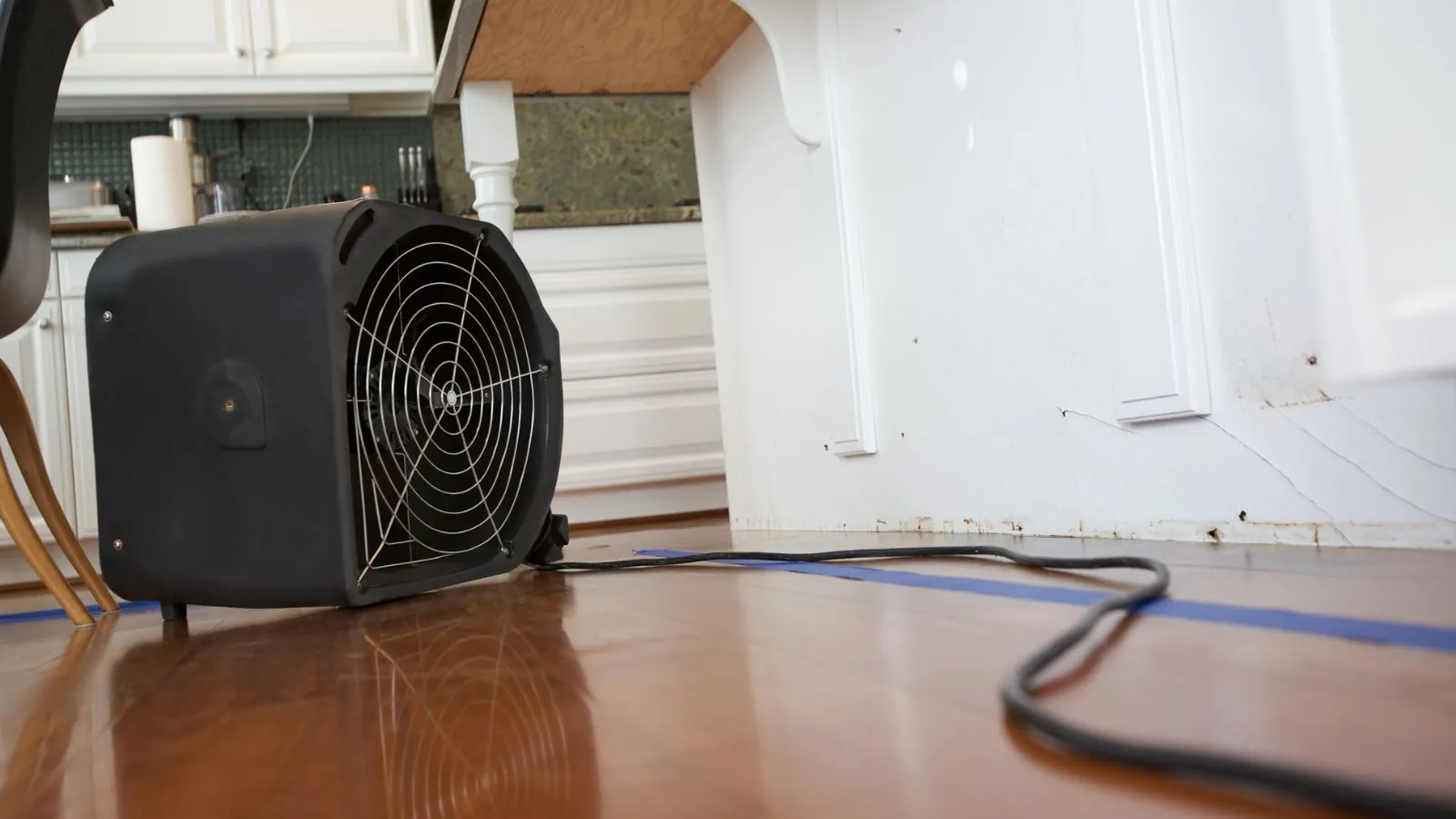
Kitchen water damage is wetting of the cabinet boxes, flooring, subfloor and walls around the sink, range and refrigerator wall. The room is built from layers that trap moisture, so a wet floor on the surface can mean a soaked cavity underneath. Call the 24/7 line at once if water is still running, if it has reached outlets, or if the floor feels soft.
Why a kitchen holds water longer than other rooms
Base cabinets sit on a toe-kick frame with a closed air space behind it, and flooring often runs under the cabinets. Water that reaches that gap spreads sideways with nothing to show on top. Particleboard boxes and the thin backs of sink cabinets absorb it quickly and swell.
Newbury Park has mixed housing ages, from Casa Conejo, the first planned community here, to the newer Dos Vientos Ranch and Rancho Conejo Village areas, according to public community histories. So the cabinet material and flooring layers under your sink may be very different from a neighbor's. A moisture meter reading, not the age of the house, tells us what is actually wet.
What the damage looks like and what it tells you
Swollen toe-kick or cabinet base
The lower edge puffs out or the laminate peels. The panel has taken up water and the box behind it should be tested.
Cupped or lifting floor
Planks, vinyl or tile edges rise near the sink or dishwasher. Water is under the flooring, often reaching the subfloor.
Soft, dark sink base
The cabinet floor gives under a finger or smells musty. This is long contact with moisture and a sign to look for mold growth.
Stained backsplash wall
A brown ring or bubbling paint above the counter or beside the range. Water has traveled through the wall cavity.
Cold, wet spot on the floor
A thermal imaging camera shows this before you can feel it. It marks where water has pooled below the surface.
Safety steps for the first hour
Shut off the supply at the angle stop under the sink, or at the main valve if you cannot find it. The City of Thousand Oaks lists four water providers serving the Conejo Valley, and its Find Your Water Provider map shows which one bills you. Check that map or your bill before an emergency, so you know whose meter shutoff to use if the house valve fails.
Safety first
Kitchens put outlets, a range and standing water in one room. Do not step into water near outlets or the refrigerator. Switch off power only if the panel is reachable on dry ground, and call your utility or 911 about any electrical or gas risk before dialing us.
Empty the sink cabinet and the lower drawers, set the contents on a dry surface, and photograph the damage before anything is moved. Keep the dishwasher and disposal off until the leak is found.
Water under the cabinets right now?
Call the 24/7 line and describe where it is wet. Same-day response when available.
How a wet kitchen is dried
Map the moisture
Moisture meters and a thermal imaging camera trace the water through cabinets, flooring and the wall behind the counter.
Extract and open access
Extraction units remove standing water. The toe-kicks come off and small access holes are cut in the cabinet backs or the wall below the counter.
Dry in place
Air movers push air into the cavities and injection drying systems force warm air under the cabinets. LGR dehumidifiers pull the moisture out of the room.
Decide replace or keep
Solid wood boxes and sealed laminate that read dry are often kept. Swollen particleboard and cabinet floors that stay wet are removed.
Verify and hand off
Daily readings show when each layer is dry. Then repair work such as new flooring or cabinet bases can begin under water damage repair.
Keep, dry or replace
| Material | Usually dried in place | Usually replaced |
|---|---|---|
| Solid wood cabinet box | Clean water, caught early | Warped or stained through |
| Particleboard cabinet base | Rarely once swollen | Most wet cases |
| Laminate or vinyl floor | Water stayed on top | Water sits under the seams |
| Tile floor | Tile and grout stay, subfloor below is dried | Cracked tile or a failed subfloor |
| Drywall behind the counter | Dry readings after drying | Soft, crumbling or contaminated |
What changes the cost and the claim
Scope depends on how many cabinet runs are wet, how many floor layers sit under them, how long the water stayed, and whether the countertop must be lifted. Replacing a sink or other plumbing fixture appears on the City of Thousand Oaks permit list, so ask the city building department about a permit before a fixture swap or major repair. Permit rules vary by scope.
The California Department of Insurance explains that standard homeowners policies do not cover flood, and many policies treat sudden and accidental damage differently from slow leaks. A drip that ran behind a sink base for months is often handled as gradual. Read your policy wording or call your insurer, and keep photos, receipts and the written scope. For a leak traced to an appliance, see appliance leak water damage.
Mistakes to avoid after a kitchen leak
- Wiping the floor dry and leaving the toe-kicks on, which seals the wet cavity.
- Running a fan across the room only, which does not reach air trapped under cabinets.
- Tearing out the whole cabinet run before readings show what is actually wet.
- Putting new flooring over a subfloor that has not been tested.
Kitchen drying follows ANSI/IICRC S500, a published industry reference, and you can ask any contractor which practices it uses. We serve homes in Thousand Oaks and Oak Park as well, and if the cavity has stayed wet long enough to grow mold, the next step is mold remediation.
Frequently asked questions
Is emergency kitchen water damage restoration available in Newbury Park?
Yes. The phone line runs all day and all night, with same-day response when available.
Can wet kitchen cabinets be saved?
Often, yes. Solid wood and sealed boxes that were wetted by clean water and caught early can be dried in place with air movers and injection drying. Swollen particleboard rarely returns to shape and is usually replaced.
Readings from a moisture meter decide this, not appearance alone.
Why are the toe-kicks removed?
The toe-kick hides an air gap where water collects and where drying air must enter. Removing it lets the crew measure and dry the space, and it is simple to reinstall.
How long does a kitchen take to dry?
It depends on what was wet and for how long. Many jobs take a few days of equipment running with daily readings, but cabinet cavities and subfloors can take longer. The job is finished when the readings are dry, not on a set date.
Do I need to move out of the house while the kitchen dries?
Usually not, but the equipment is loud and the kitchen may be limited. Plan to eat out or use a small area temporarily, and ask the crew what can stay in use.